The VA Loan Roadmap
Download the printable PDFThe VA Loan Roadmap, 5 pages (PDF, 2.9 MB)Everything eligible veterans and service members need to know to use the VA home loan benefit well, from confirming eligibility through closing day and every home after that.
The VA loan is a mortgage benefit backed by the Department of Veterans Affairs (VA) and issued by a private lender, not by VA itself. It was built to make homeownership more reachable for the people who served.
Who qualifies
The benefit is open to four groups:
- Active duty service members. Currently serving, generally after 90 continuous days of active service.
- Veterans. Most must meet a minimum service length that depends on when they served, and VA reviews the character of your discharge when it issues your Certificate of Eligibility.
- National Guard and Reserve members. Typically after six creditable years of service (and still serving, honorably discharged, or retired), or after 90 days of qualifying active duty when called up.
- Surviving spouses. In most cases, the spouse of a service member who died in service or from a service-connected disability and who has not remarried, or who remarried after age 57. VA also has to find the spouse eligible for certain Dependency and Indemnity Compensation (DIC). Spouses of service members who are missing in action or held as prisoners of war may also qualify.
If you are not sure where you land, the VA Loan Limit Estimator is a quick place to start.
The guaranty behind the loan
Behind every VA-backed loan is a federal guaranty. VA promises the private lender that it will repay a portion of the loan if the borrower defaults and the home is lost to foreclosure. That promise protects the lender, and it is what unlocks terms conventional buyers rarely see.
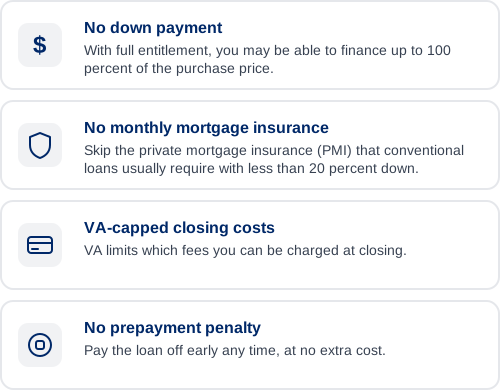
"Capped" is shorthand. VA limits which fees a borrower can be charged, and it limits how much a seller can contribute to your costs to 4 percent of the home's reasonable value, the value VA sets through the appraisal. Sellers are allowed to help with closing costs within that limit.
Seven steps, start to finish
Most VA purchases follow the same path from first question to keys in hand.
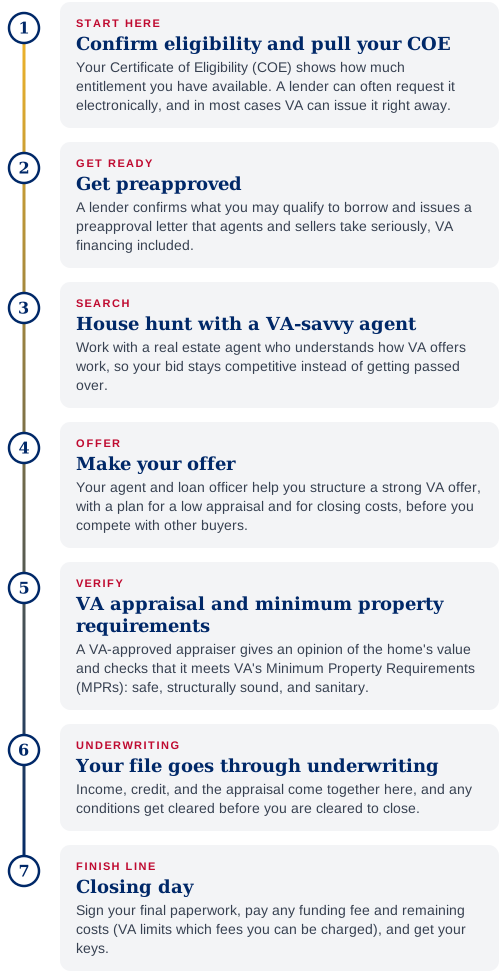
An appraisal is not the same as a home inspection, so it is worth hiring an inspector too. If the appraisal comes in below your offer price, VA lists three options: ask for a reconsideration of value, renegotiate the price with the seller, or pay the difference at closing. To see what a comfortable budget looks like before you get preapproved, try the Home Affordability Calculator.
The one VA-specific cost to plan for
Instead of monthly mortgage insurance, most VA borrowers pay a one-time VA funding fee. You can pay it at closing or roll it into the loan. The rate depends on your down payment and on whether this is your first use of the benefit.
Funding fee on a purchase loan
| Down payment | First use | Subsequent use |
|---|---|---|
| Less than 5% | 2.15% | 3.30% |
| 5% to 9.99% | 1.50% | 1.50% |
| 10% or more | 1.25% | 1.25% |
Rates are VA's published schedule as of September 2026. VA has changed this schedule before, so confirm the current rate with your lender.
A VA IRRRL refinance uses a flat 0.50% fee regardless of prior use. A VA cash-out refinance uses 2.15% for first use and 3.30% for subsequent use, and the rate does not change with the amount of equity left in the home.
You pay no funding fee if you:
- receive VA compensation for a service-connected disability
- are eligible for that compensation but receive retirement or active-duty pay instead
- are a surviving spouse receiving Dependency and Indemnity Compensation (DIC)
- are a service member with a proposed or memorandum rating, issued before closing, saying you are eligible for compensation because of a pre-discharge claim
- are an active-duty member and give VA evidence of a Purple Heart on or before your closing date
Not just a purchase loan
The benefit covers more than buying a home. These are the four common ways to use it.
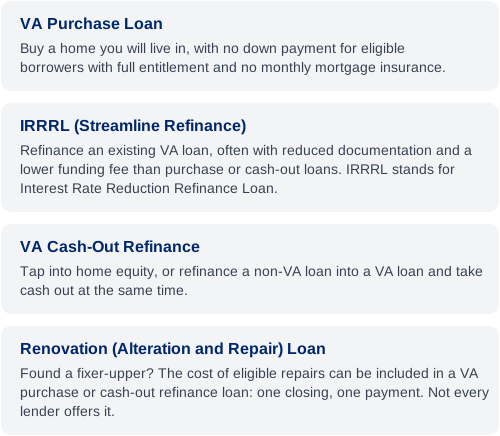
On a purchase, you certify that you will live in the home, generally within 60 days of closing. VA's official name for a renovation loan is an alteration and repair loan. The repairs must be the kind normally found in similar homes and must bring the property up to VA's minimum property requirements. For a closer look at the two refinance options, read IRRRL vs. Cash-Out: The Two Ways to Refinance a VA Loan, or run the numbers with the IRRRL Breakeven Calculator.
Your benefit doesn't expire after one use
Many veterans think the VA loan can only be used once. It can be used again. Entitlement, the amount of the loan VA guarantees for you, can be restored, and many veterans buy a home with the benefit more than once in their lives. There are three ways to use it again.
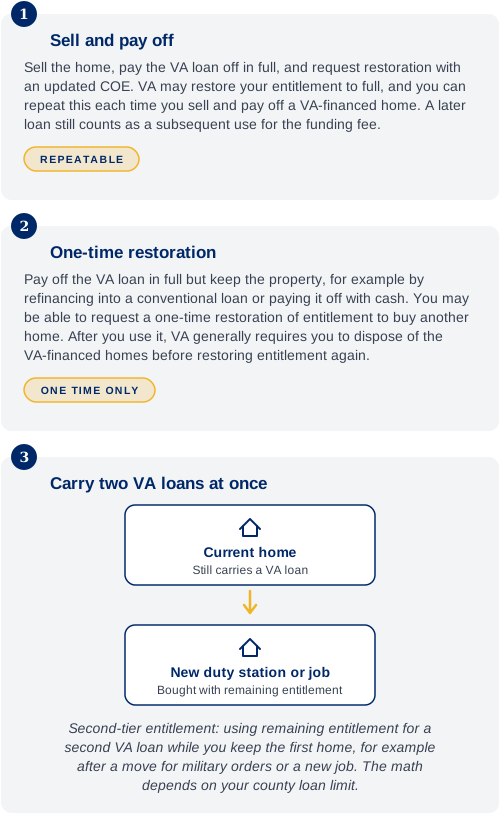
The full walkthrough is in Can You Use Your VA Loan Benefit More Than Once?. To see how your county's loan limit affects a second loan, use the VA Loan Limit Estimator.
What veterans ask most often
Do I have full entitlement?
A prior VA loan can reduce your entitlement, especially one that is still active. Your Certificate of Eligibility shows how much you have available, so check it early.
What if I'm moving on a permanent change of station (PCS) soon?
A move or deployment does not rule out a VA loan. If you cannot be at the closing table, VA allows a borrower to sign through an attorney-in-fact under a valid power of attorney, and it accepts electronic signatures. Your state's closing rules still apply, so talk to your lender and title company early. VA also allows more than the usual 60 days to move in when certain circumstances call for it.
Can I use a VA loan on new construction?
Yes. A VA-backed loan can be used to buy a newly built home or to build one. The property still has to meet VA's minimum property requirements and be appraised by a VA-assigned appraiser. VA generally requires a builder's warranty on new construction, and the builder must meet state and local licensing rules. Not every lender offers construction loans, so confirm before you sign a build contract.
Can I assume the seller's existing VA loan?
Often, yes. A qualified buyer can take over a seller's VA loan, and the buyer does not have to be a veteran. The loan's servicer approves the assumption, and the buyer must qualify. Unless an eligible veteran buyer substitutes their own entitlement, the seller's entitlement stays tied to that loan until it is paid off. See How VA Loan Assumptions Work for the details.
Map out your path
If you have a Certificate of Eligibility, Gene, a Mortgage Loan Originator (MLO), can pull it electronically and walk you through what it means for your next purchase.
This article is general information, not a commitment to lend or financial advice for your specific situation. VA rules and fee schedules can change, so confirm current requirements with your lender or at va.gov.
More questions? Read the VA loan Q&A or explore all guides.
Gene Richter, MLO, NMLS #2806488 | PBT Bancorp, NMLS #257781. General information, not a commitment to lend. Not affiliated with or endorsed by the U.S. Department of Veterans Affairs.